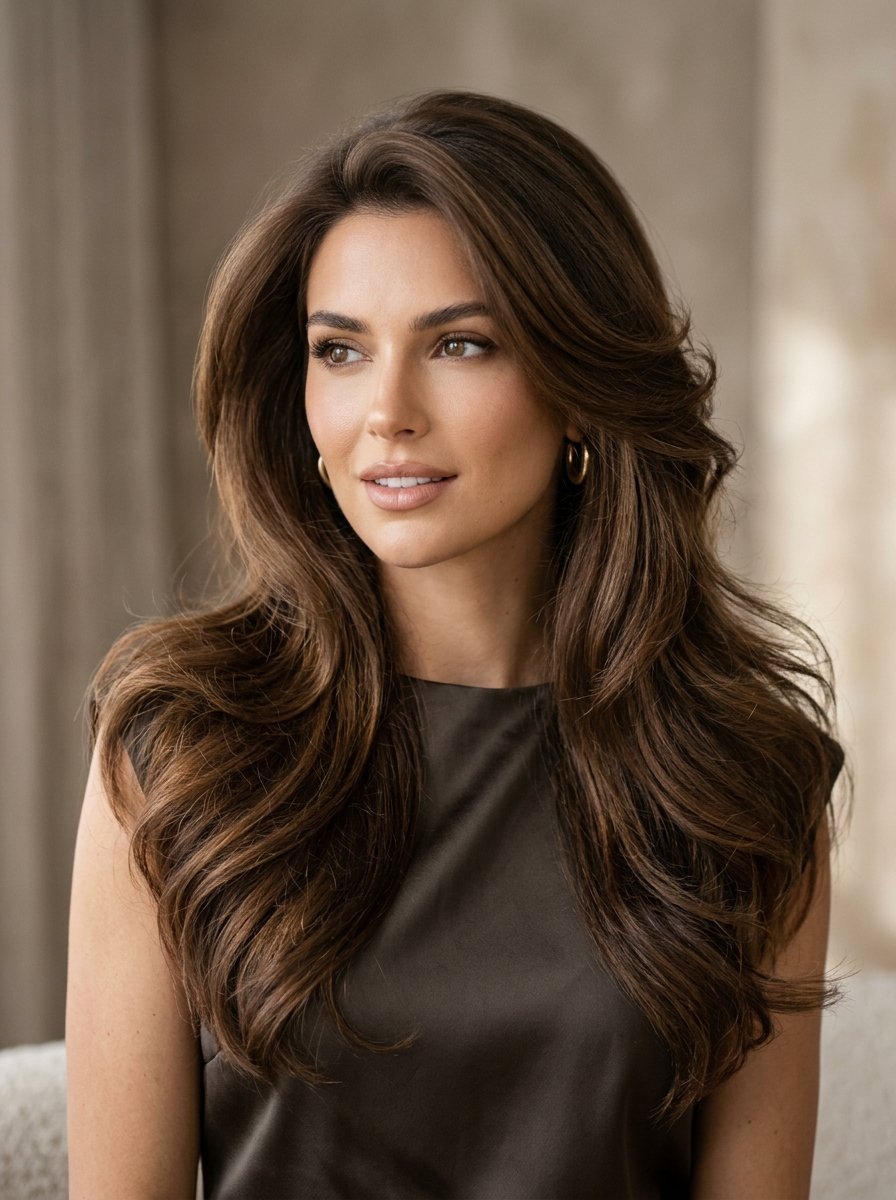
Layered hair can look different when air-dried, brushed out or styled with heat. Begin with the cut you have and one result you want to change: a flatter crown, front pieces that turn the wrong way or ends that feel disconnected. Changing one part of the routine at a time makes it easier to see what helps.
Start with the finish you can repeat
Compare your usual styling time with the finish in your reference. A smooth, curved blowout and a relaxed air-dried texture are different goals. Ask your stylist to demonstrate a routine with tools you already own, including how to position the front sections and when to stop brushing or touching the hair.
Use products and heated tools according to their instructions. Ask a professional for advice specific to your hair if you are unsure about a product or tool; this guide does not prescribe temperatures or chemical treatments.
Option one: work with an air-dried texture
Set your intended parting while arranging the hair, then position the front sections where you want them to fall. If you use a styling product, follow its directions and begin with the amount recommended for your hair. Let the hair settle before deciding whether a section needs more attention.
Once dry, compare the overall outline rather than trying to make every section identical. If shorter layers consistently sit awkwardly, photograph the result and show it to your stylist. That gives them a more useful reference than a description of how the hair looked immediately after leaving the salon.
Option two: a controlled blow-dried shape
Work in manageable sections instead of repeatedly brushing the whole head at once. Follow the dryer’s guidance on distance and movement, and avoid holding concentrated heat on one spot. A brush can guide the ends toward or away from the face; ask your stylist to show the direction on a front section before trying it yourself.
Focus on the areas that define the shape for you. A neat front section and a consistent bend at the ends may be enough; every layer does not need a separate curl. If a round brush is uncomfortable to handle, ask for an alternative routine rather than assuming it is essential to the cut.
Option three: add a little movement to dry hair
If you choose to use a heated styling tool, check that the tool is intended for your hair’s current state and follow the manufacturer’s instructions. Avoid repeatedly going over the same section simply because it does not match a reference photograph. The cut, texture and preparation all influence the result.
Try shaping only the front and a few visible sections first. Compare the result before adding more. Leaving some sections less styled can produce a softer finish, while styling every section in the same direction can make the outline more uniform.
When the crown looks flat
Check whether the parting, product placement or weight of the longer sections is contributing to the look. Try one small change and take a photograph under the same lighting. Avoid assuming that adding more product or shorter layers will automatically solve it. If the shape still does not work, discuss the cut with your stylist.
When the ends turn in different directions
Notice whether the ends meet your shoulders, collar or scarf. A bend caused by that contact may return even after styling. You can choose to work with the movement, change the way you finish that section or discuss a slightly different length at the next appointment.
When face-framing pieces will not stay back
Check the shortest length before expecting the pieces to tuck behind the ears or reach a ponytail. A clip or a different parting may help temporarily. For the next cut, use our layered haircut consultation guide to make tie-back length part of the plan.
Keep a small styling record
For two or three attempts, note the product used, drying method and the part that worked. Take photographs from the same angle in similar light. This helps you compare the routine fairly and gives your stylist concrete information if you need an adjustment.
To compare the actual cut shapes rather than their finishes, see the layered haircut reference guide. A repeatable routine starts with a cut that supports the way you want to wear your hair.
Keep exploring ideas that fit your own style and routine.
← Back to the journal

Conversation